 by
by Solid fuel boiler are becoming popular heating solutions for private homes due to their efficiency, cost-effectiveness, and independence from gas networks. Understanding the main components of these boilers is essential for ensuring their safe and efficient operation.
Main Components of a Solid Fuel Boiler
Combustion Chamber
The combustion chamber is where the fuel burning occurs. Made of heat-resistant metal, it supports different fuels like wood, coal, pellets, and briquettes.
Heat Exchanger
The heat exchanger transfers heat from the combustion process to the heating medium (water or antifreeze). Typically made from steel or cast iron, its design significantly affects the boiler’s efficiency.
Ash Pan
The ash pan collects ash and residues from combustion, simplifying the cleaning process crucial for boiler efficiency.
Chimney
The chimney expels combustion products outside. Proper chimney design ensures efficiency and safe boiler operation.
Doors and Regulators
Doors provide easy access to the combustion chamber and ash pan, while regulators control combustion intensity and temperature.
Automation
Modern solid fuel boilers include automation to regulate operations, maintain temperature, and reduce fuel consumption.
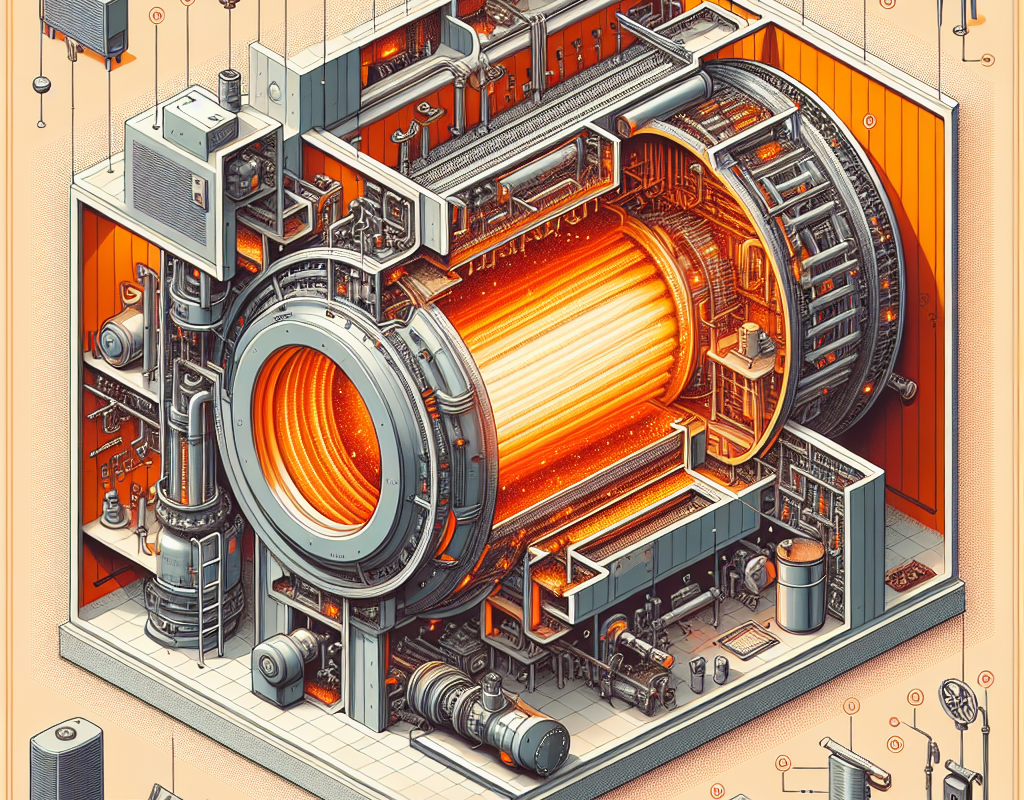
[Image: Solid fuel boiler diagram]